We brought the materials (shells and rocks) that had been interesting the children to the carpet for a discussion. The children began by stating what they knew about the shells. Eventually, theories and 'I wonder' statements emerged from the children.
Monday, 4 February 2013
Shell Inquiry
One day we had water colours at our art studio in our classroom. Many children created paintings of flowers, their families or their friends. However, one student decided to paint the rocks she'd seen at the beach. (We had rocks and shells at our Discovery Table) The children at the art studio began to talk excitedly about their own beach experiences and also began to draw about the beach and the shore.
We brought the materials (shells and rocks) that had been interesting the children to the carpet for a discussion. The children began by stating what they knew about the shells. Eventually, theories and 'I wonder' statements emerged from the children.
A Moment at the Light Table
Today two children in our classroom were working together with such focus and attention. I watched and wondered what they were creating. They came running over when they were ready to share (before they had told me it was a surprise!) and told me they had made a zoo for all the animals.
The green mat is a large piece of felt. (Felt does wonders for our light table exploration...)
Wednesday, 23 January 2013
Building Materials
For a long time we had large blocks at our
construction centre. Great collaboration was happening as the children built
together. After two months we noticed that the small log blocks were not being
used and we wondered if the big blocks were taking away from other materials we
had placed out.
We decided to let another teacher take on our big blocks and watch what happened. The children continued to build as they had done before, but they were using more detail in their construction and problem solving ways of constructing using smaller blocks.
We found that children would bring smaller materials from different centres to add to their constructions. We have not had the big blocks for over two months and not one child has asked that we bring back the larger blocks!
We decided to let another teacher take on our big blocks and watch what happened. The children continued to build as they had done before, but they were using more detail in their construction and problem solving ways of constructing using smaller blocks.
We found that children would bring smaller materials from different centres to add to their constructions. We have not had the big blocks for over two months and not one child has asked that we bring back the larger blocks!
Tuesday, 22 January 2013
Amaryllis Bulbs
Our classroom was given 8 amaryllis bulbs recently. The students were very intrigued with these "strange" looking objects that appeared on our round table after lunch.
Here are just some of the students' thoughts:
"I think the thing is a radish."
"I think it is an onion."
"It's a turnip."
"It's like cinnamon. So brown."
"You cook with it."
"It's growing."
"It's a seed."
"Inside are the seeds. We need to plant it."
Those are just a few of the ideas that the students had.
We've planted most of the bulbs now and are patiently waiting to watch and see what will happen.
Since some students were very convinced that there were seeds inside and so we cut one open to look for the seeds. We also compared a cut onion to the cut bulb and let the children smell both to see if they had the same smell.
We are all excited to see what will happen in the coming weeks!
Here are just some of the students' thoughts:
"I think the thing is a radish."
"I think it is an onion."
"It's a turnip."
"It's like cinnamon. So brown."
"You cook with it."
"It's growing."
"It's a seed."
"Inside are the seeds. We need to plant it."
Those are just a few of the ideas that the students had.
We've planted most of the bulbs now and are patiently waiting to watch and see what will happen.
Since some students were very convinced that there were seeds inside and so we cut one open to look for the seeds. We also compared a cut onion to the cut bulb and let the children smell both to see if they had the same smell.
We are all excited to see what will happen in the coming weeks!
Sunday, 20 January 2013
Sketching Sculptures
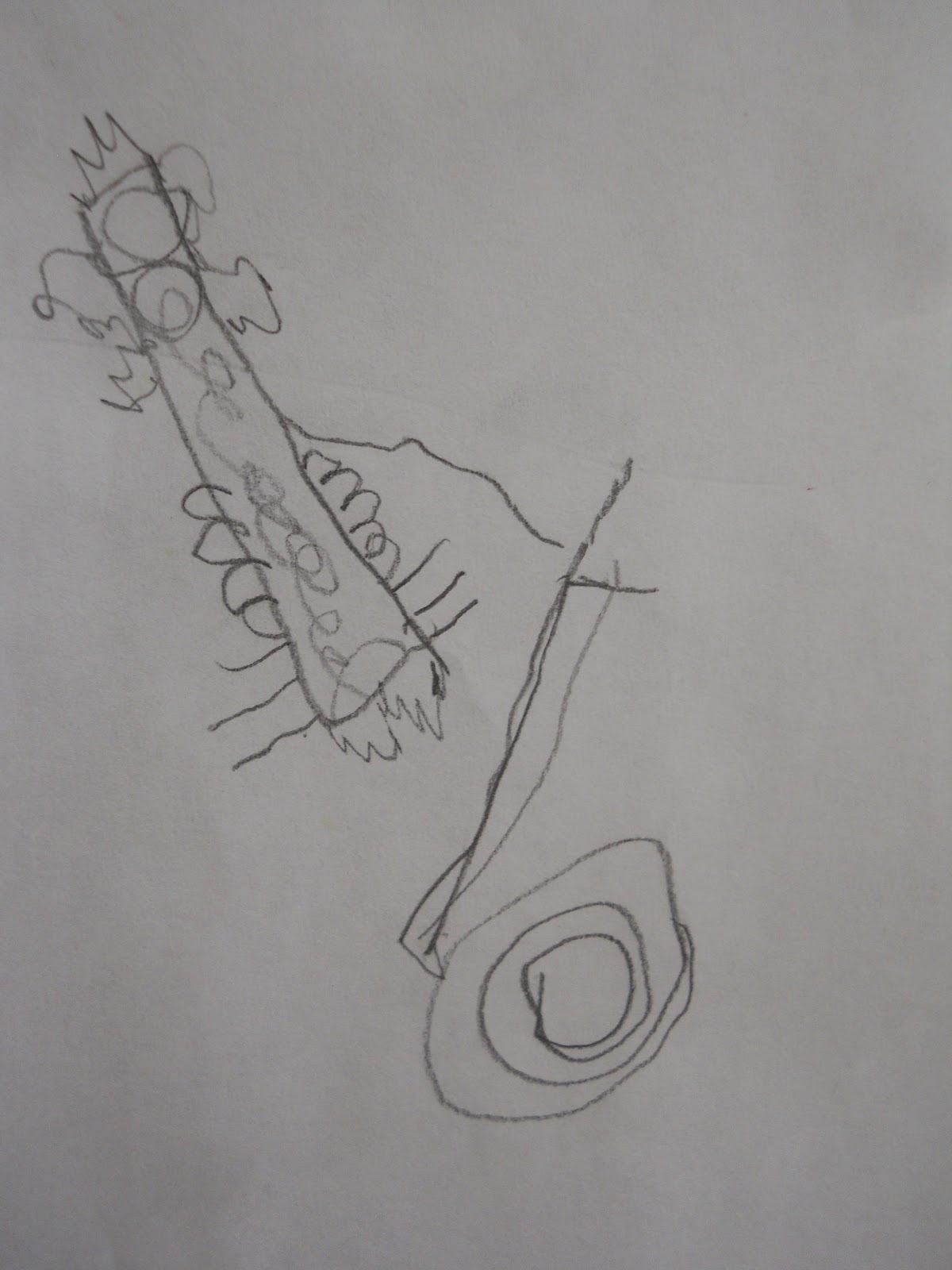
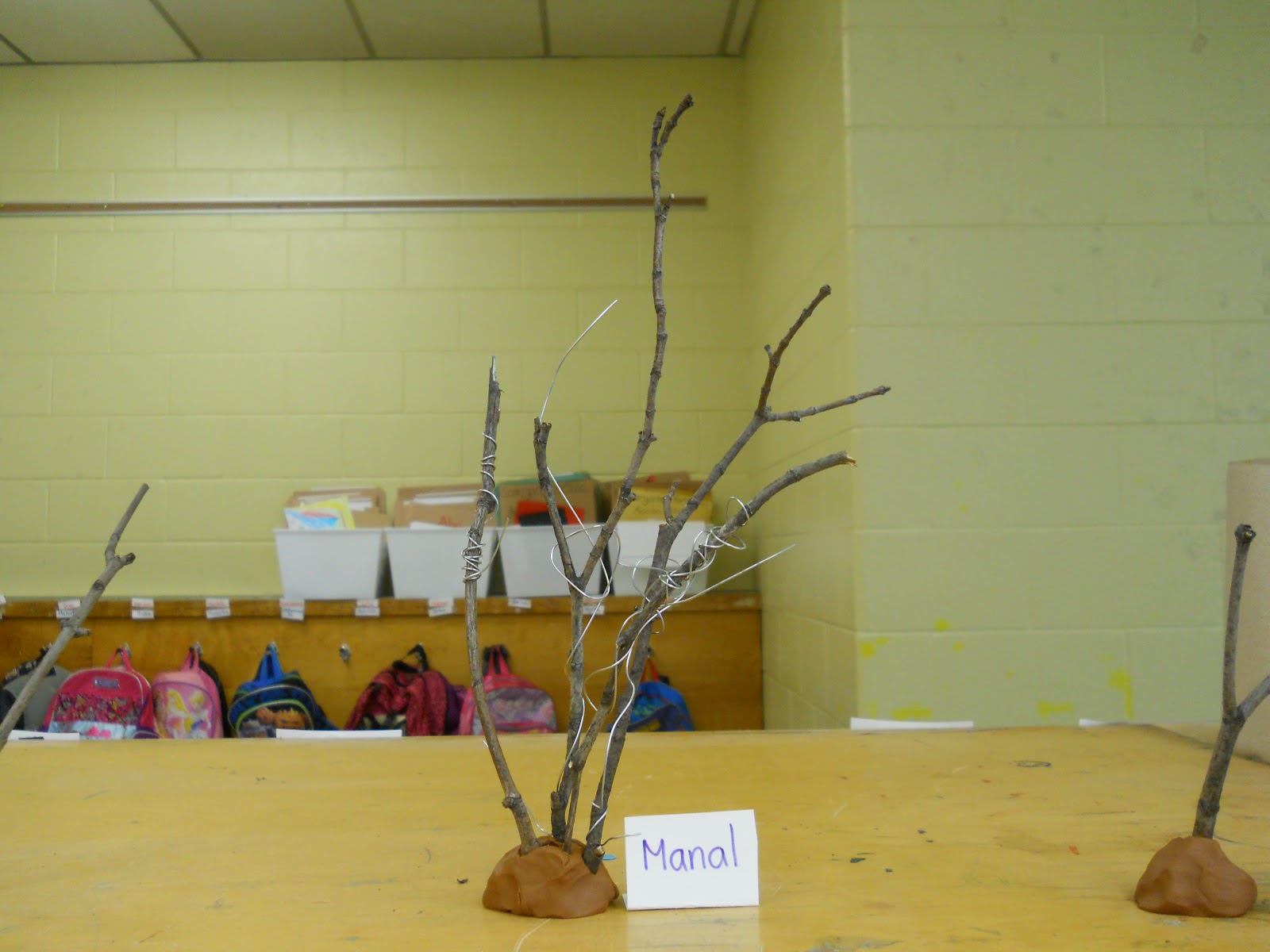
We started the day by talking about sculptures and reading our art book “An Art Alphabet: M is for Masterpiece” by David Domeniconi. In his book he describes sculptures as “art that’s not flat.” We discussed the sculptures we had created. Four sculptures were chosen and placed at tables around the classroom. The children were told they would sketch the sculptures. We demonstrated some simple sketching techniques such as, how we use our eyes to look for movement and shapes in the stick and wire sculptures. We talked about being artists in our classroom.
The children chose which sculpture they wanted to sketch and went to the table. It was amazing to watch the children concentrate so intently on their sketching process. You could hear a pin drop in our room, they were so focused.
Working with Wire and Twigs
We went on a trip to our local valley and returned with a large bag full of twigs. I didn't know what to do with them right away and they rested on top of our shelf for a few days.
I decided to introduce the twigs and wire by placing the materials at the Art Studio. I sat down and watched as the students began to explore the twigs and twisting the wire.
It was the first time the children had explored wire and introducing twigs gave them a different dimension to work with. Many of the children created wire sculptures that grew upwards. As they explored over the next few days, their creations began to differ in size, shape and direction.
I decided to introduce the twigs and wire by placing the materials at the Art Studio. I sat down and watched as the students began to explore the twigs and twisting the wire.
It was the first time the children had explored wire and introducing twigs gave them a different dimension to work with. Many of the children created wire sculptures that grew upwards. As they explored over the next few days, their creations began to differ in size, shape and direction.
Wire
is an amazing medium to work with. Part of what I noticed is that I am at the
same level as my children, not having worked with wire often, discovering
together the properties and creations that could come out of imagination and
experimentation.
Tuesday, 15 January 2013
Swirls
We have found that our earliest inquiries in the year keep poping up in the language that the children use. One such example is how they use what they learn to express their thinking with new experiences. During our snail inquiry we had also been exploring patterns and sorting. When we read a non-fiction book on snails, one child noticed that the snails had designs on their shells. She called it a swirl. Another child questioned what she meant by swirl and she came up to the board and drew what she meant.
Other children came up and drew their own swirls on the whiteboard. We asked the children if they would like to create their own swirls at the Art Studio. They said yes!
Together we looked through our Art Studio materials and decided on what we could use.
1. Paint
2. Feathers
3. String..."because string is curly like."
The children were engrossed in their experimentation and dialogue as they encouraged others and explained what they were seeing.
Other children came up and drew their own swirls on the whiteboard. We asked the children if they would like to create their own swirls at the Art Studio. They said yes!
Together we looked through our Art Studio materials and decided on what we could use.
1. Paint
2. Feathers
3. String..."because string is curly like."
The children were engrossed in their experimentation and dialogue as they encouraged others and explained what they were seeing.
| Using String |
| Using Feathers |
| Experimenting with pressing papers together! |
| Wow! And the best part was that it was completely unplanned!! (Or as one student said, "Best art ever!") |
Subscribe to:
Posts (Atom)